
Surfaces That Handle Daily Traffic and Weather
Concrete Flatwork Installation in Barron for driveways, patios, garage slabs, and commercial surfaces that endure freeze-thaw cycles without failing
Driveways crack across the center, garage floors develop scaling near doorways, and patio surfaces settle unevenly after several winters. Frazier Construction LLC addresses these issues through concrete flatwork installation designed for structural performance and long-term durability in Barron. The service includes proper base preparation, control joint placement, and finishing techniques that prevent common failure patterns in northern climates.
Flatwork involves pouring concrete over compacted aggregate bases, installing reinforcement where required, and finishing surfaces to specific textures or decorative patterns. The base must provide stable support and drainage to prevent settling, while the concrete mix must resist moisture penetration and freeze-thaw damage that causes spalling and cracking.
Arrange an on-site consultation to evaluate existing conditions, drainage patterns, and base requirements before installation.
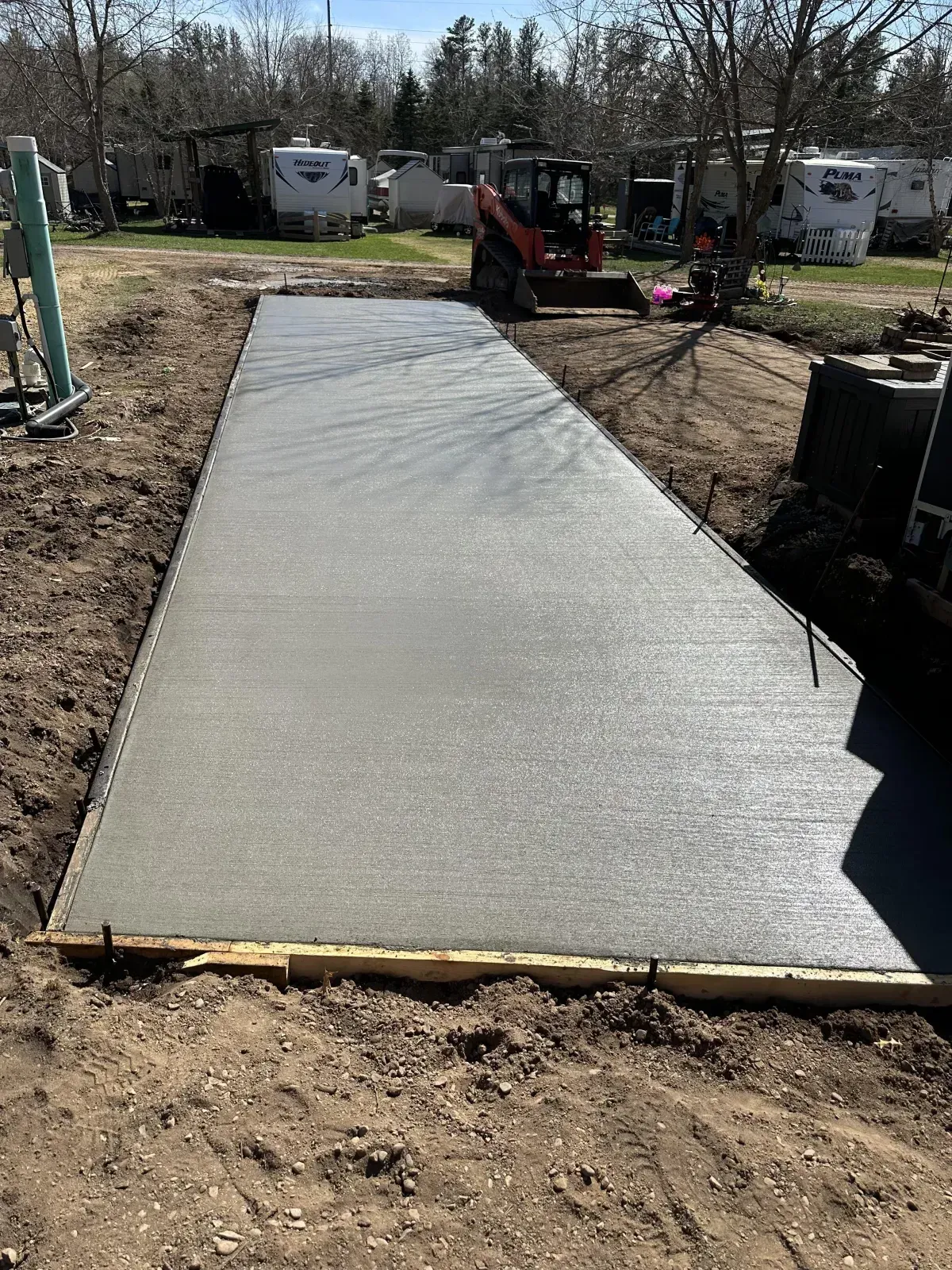
What Proper Flatwork Requires
Base preparation determines whether flatwork performs for decades or fails within years. The subgrade must be compacted to ninety-five percent density, topped with four to six inches of crushed aggregate that drains water away from the concrete. Control joints are cut or formed at intervals based on slab thickness to control where cracks occur as concrete shrinks during curing.
After installation, you see level surfaces with uniform texture, proper slope for water runoff, and joints positioned to direct cracking along intentional lines. Driveways support vehicle loads without rutting or settlement, patios remain level for furniture placement, and garage slabs resist damage from tire traffic and chemical exposure. Custom finishes include broom textures for traction, smooth troweled surfaces, or decorative patterns that add visual interest.
Commercial installations often involve larger pours requiring multiple trucks and coordination with business operations to minimize disruption. Sidewalks must meet ADA slope requirements and public right-of-way standards, while loading areas require thicker sections with additional reinforcement to handle concentrated wheel loads without cracking.
Answers to Frequent Flatwork Questions
Homeowners and business owners in Barron typically want to understand what affects longevity and appearance over time.
What causes new concrete to crack shortly after installation?
Concrete shrinks as it cures, and without properly spaced control joints to direct that shrinkage, random cracks form across the surface, often appearing within the first month after placement.
How thick should a residential driveway be?
Standard driveways require four inches of concrete over a compacted base, though areas with heavy vehicles or poor soils may need six inches to prevent cracking and settlement under repeated loading.
When can vehicles drive on new concrete?
Concrete reaches sufficient strength for light foot traffic within twenty-four to forty-eight hours, but vehicle traffic should wait at least seven days to avoid surface damage and internal cracking during the curing process.
Why does concrete scaling occur near garage doors?
Road salt tracked onto concrete surfaces penetrates the top layer, and repeated freeze-thaw cycles cause the surface to flake and deteriorate, especially when concrete was not air-entrained during mixing.
What does base preparation actually involve?
Topsoil and unstable material are removed, the remaining soil is compacted, and crushed stone is spread and compacted in layers to create a stable, draining foundation that prevents settlement and frost heaving in Wisconsin's climate.
Frazier Construction LLC installs residential and commercial flatwork with attention to base stability, drainage design, and finish quality. Contact our team to discuss your project scope, site conditions, and timeline for completion.